
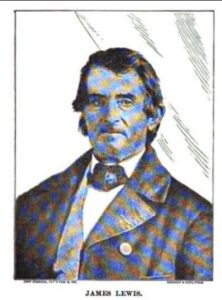
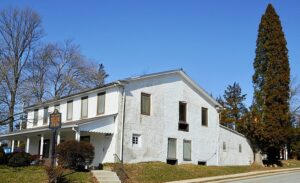
 In 1837, Quaker James Lewis, a tanner on Malin Road, took a stand on one of the great issues roiling the country – slavery and abolition. A radical thinker, James T. Danneker, was living with the Lewis family, and the men had long discussions on the topic. They determined to have a public meeting and invite a distinguished speaker to talk on the issue, at Marple Schoolhouse No. 1.
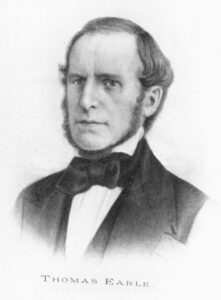
The speaker, Philadelphia lawyer and journalist Thomas Earle, arrived to find an overflow crowd at the schoolhouse, some friendly, more hostile. Let a witness tell what happened:
“After a few moments of impressive silence, Thomas Earle arose, and in a quiet, dignified manner, said that he had come there for the purpose of talking upon the subject of American slavery, but having heard on his way that there was some opposition, he did not wish to intrude and proposed that James Lewis take the sense of the meeting whether or not he should speak. The vote was almost unanimous for him to proceed. He spoke nearly two hours, and held the audience throughout in rapt attention, as if spell-bound, by his touching appeals and persuasive oratory. He pictured the life of the unrequited laborer, of families separated at the auction-block and fond affections outraged. He brought this 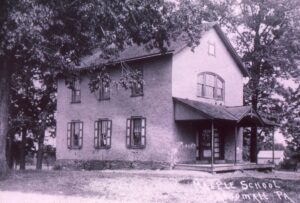 condition of servitude directly home to the firesides and hearts of his audience, “remembering those who were in chains as bound with them,” and so effective was this portraiture that at the close of the meeting “many who came to scoff remained to pray. Among the first to take the speaker by the hand and thank him for the light and the instructions given, were some of the leaders of the party who had designed to be obstreperous. This meeting was followed by others, and by debates in different parts of Delaware and
 Chester counties, which largely changed sentiment in favor of the abolition of slavery. James Lewis now became known as a firm and earnest abolitionist.”
One person can make a difference. Lewis and Danneker later were active in the Underground Railroad – the Lewis farm was a safe station stop. Both men lived to see the terrible war and the end result – the abolition of slavery in the South.
Thomas Earle took part in the Pennsylvania Constitutional Convention and proposed the unheard-of proposition that blacks be allowed to vote. He ran with James Birney in the 1840 presidential election on the Liberty Party ticket and an anti-slavery platform. Both efforts failed, but the Liberty Party planted the seeds of the Republican Party that would take up the cause and succeed.
For more on the history of Marple, visit the Marple Historical Society website and Facebook page, and join the Society to keep up to date on coming events: www.MarpleHistoricalSociety.org