
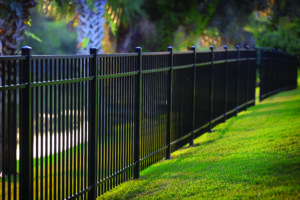
 Fencing is one of the most valuable upgrades a homeowner can make, offering privacy, security and visual appeal. Whether you’re enclosing a backyard, defining property lines or improving curb appeal, the right fence can enhance both the function and value of your property.
Before choosing a fence, start by identifying your primary goal. If privacy is your priority, solid options like vinyl privacy, wood stockade or board-on-board fencing are ideal. If aesthetics matter most, decorative aluminum, ranch-style fencing or custom designs can elevate your home’s appearance without fully enclosing the space. For families with children or pets, safety becomes the focus, making height, strength and durability essential.
Once your goals are clear, selecting the right material is key. Your choice affects not only the upfront cost but also long-term maintenance:
- Wood fencing offers a classic, natural look and is often more affordable in materials, though labor can be higher. While pressure-treated or naturally durable woods like cedar can extend their life, wood requires ongoing maintenance, such as staining or sealing, to prevent rot and weather damage.
- Vinyl fencing is a low-maintenance option that resists rot, insects and fading. Although it has a higher initial cost, it often saves money over time due to minimal upkeep.
- Chain-link fencing is the most budget-friendly and highly durable. While it lacks privacy and a high-end appearance, it provides excellent value, especially for larger areas.
- Aluminum fencing delivers an upscale look with minimal maintenance. It’s long-lasting, enhances curb appeal and adapts well to uneven terrain, making it ideal for sloped properties.
Each material has its advantages, so the best choice depends on your priorities, budget and desired look.
Common Misconceptions About Fence Pricing
Fence pricing is often misunderstood, leading to unrealistic expectations. Here are a few common myths:
- “Pricing is based only on linear footage.”
While length matters, costs also depend on materials, terrain, labor, gates and site conditions. A flat, accessible yard will cost less than one with slopes or obstacles. - “All materials cost the same to install.”
Installation costs vary depending on the material. Vinyl and aluminum require precise installation and specialized components, while wood and chain-link fences involve heavier materials and more labor-intensive handling. - “A cheaper fence is the same as a more expensive one; it’s just a fence.”
Lower upfront costs often come with higher long-term expenses. Cheaper materials and workmanship can lead to more maintenance, repairs or early replacement. In the end, you get what you pay for; investing in quality saves money over time, and financing options are available with most contractors and can make it more attainable.
A fence is more than just a boundary; it’s an investment in your home’s safety, privacy and appearance. By defining your goals, choosing the right materials and understanding costs and regulations, you can create a fence that transforms your yard into a functional and inviting space.