
 Next month, November, is National Diabetes Month. The prevalence rate of diabetes is 11.6% of the population, involving 38.4 million Americans. This condition becomes more common as we age and engage in unhealthy habits.
You should plan to make regular eye doctor visits when you are diagnosed with diabetes. High blood sugar can lead to problems like blurry vision, cataracts, glaucoma and retinopathy. In fact, diabetes is the primary cause of blindness in adults ages 20 to 74.
Blurry Vision
If you notice blurry vision with your diabetes, schedule an eye examination to re-evaluate your prescription. It can be a mild change caused by elevated blood sugars, causing your crystalline lens to swell and change your ability to see. To correct this, you need to get your blood sugar into the normal target range, which can take as long as three months. Then the doctor can get an accurate eyeglass prescription.
Cataracts
The natural lens of your eye allows your eye to see and focus on an image, just like a camera. When the lens gets cloudy, like a dirty window, that means a cataract has formed. Anyone can get them, but people with diabetes tend to get them earlier and get worse faster. This cloudy lens causes blurry vision with glare symptoms. The diabetic cataract can improve slightly with better blood sugar control.
Glaucoma
People with diabetes are more likely to have glaucoma, which comes in several types. Pressure builds up inside your eye when fluid can’t drain like it should. This can damage nerves and blood vessels and cause changes in vision. Topical eye drops, laser treatment and more advanced surgical procedures are used to control the internal eye pressure.
Diabetic Retinopathy
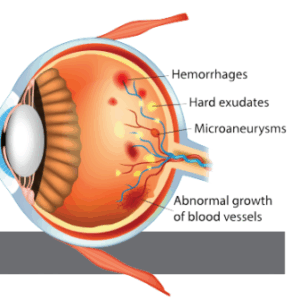
The retina is a group of cells on the back of the eye that takes in light and then turns it into images that the optic nerve sends to the brain. Damage to the small blood vessels in your retina causes diabetic retinopathy. It is directly related to elevated blood sugar levels. If it is not diagnosed early and treated, it can lead to permanent poor vision. The longer you have diabetes, the more likely you are to develop it. If you keep your blood sugar under control, you can lower your chances.
There are a few levels of severity of retinopathy that must be treated to prevent retinal hemorrhages, scarring and retinal detachment.
The Need for an Eye Examination
A yearly eye examination for stable diabetic patients is necessary. More frequent visits are required for patients with more advanced diabetic eye disease. So please keep up with your eye doctor’s recommendation to prevent permanent vision loss.